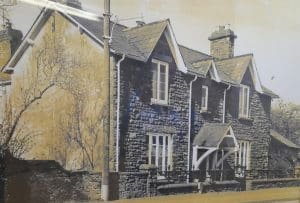
A house in Aylburton, owned by Joseph Taylor, was leased for £30 a year. Adapted for use as a Cottage Hospital, it opened on 11th October 1882. Mrs. Bathurst only saw the early success of the hospital, as she died in 1885 aged 42. Several operations took place over the first few years. Chloroform was used, injections given, and various minor operations performed.
This was many decades prior to the formation of the NHS. Funding for the opening and running the hospital required strenuous effort. Money was raised by many organisations, supplemented by general subscriptions. People could make an annual payment to ensure free treatment. In 1893 subscriptions were around £100 per year (equivalent to about £16,000). This was beyond the reach of many of the poorer people in the area. Collections from local churches, the Tinplate Works, an annual tea at Lydney Park, together with concerts, parties, and benefit clubs, helped to raise funds. By 1904 funding was coming from additional sources, including the Masonic Lodges, and from theatrical entertainment, organised by the Misses Cook of Priors Mesne.
“Her enthusiasm and desire to mitigate the suffering of her neighbours soon inspired those who met her”.
“Only for a few years had she seen the fruits of her labours, her far sighted policy and her thoughts for others”.
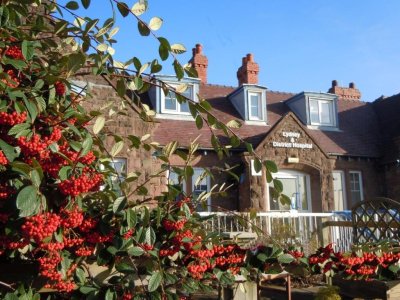
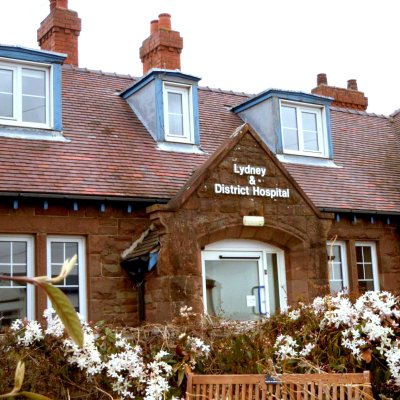
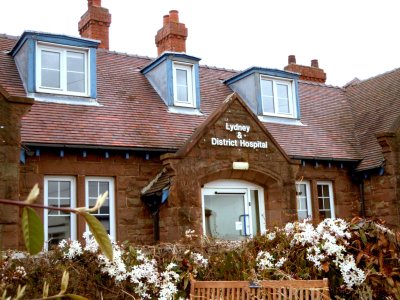
Lydney District Hospital by R.A.J. Bell
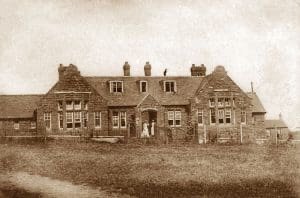
 The site in Aylburton was not ideal. A new building in a different location was proposed. An open competition was held in 1906. A £5 award was offered for the best proposal. The offer of land on Bream Road, made by the first Viscount Bledisloe and his father, was accepted. Messrs Byard and Son of Gloucester built the new hospital that opened in 1908. It had two male wards upstairs and two female wards downstairs. It also had accommodation for nurses and servants. A management committee of 25 people was appointed.
“The object of this institution is to afford prompt surgical aid in cases of accident and to supply skilled medical treatment, combined with good nursing, pure air, and suitable diet, to patients who cannot obtain these advantages in or near their own dwelling- For lending linen, and necessary articles to poor persons during sickness, and as opportunity offers, for providing a nurse”.
 Regular fundraising dances and concerts were held in Lydney Town Hall. Mr. Rowlinson, the miner’s agent, helped get funds from the collieries. Hospital Sunday was an annual event, which provided much needed funding. It was set up by the Milkwall Charity Committee. The first event was held at the Scarr, near Sling, in 1911. Parades of Forest Bands marched to Scarr. It became so popular that a bandstand was built there in 1913.
During the first World War the local Red Cross Society took over the hospital. Charles Bathurst was its president. A few beds were kept for local people. Nearly 3000 wounded British and Belgian soldiers were treated at the cottage hospital across the four war years. Lydney Town Hall was also converted into a hospital during the war.
Mr M. P. Price M.P. for the Forest of Dean declared that he firmly believed that the rising generation as a result of the various youth movements in the country today, would become more and more healthy and there would be less need for hospitals.
Gloucester Citizen 1939
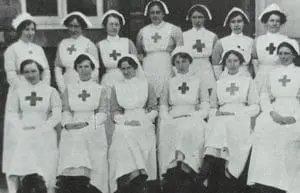 Taxation began to rise after the war. This affected donations made to charities. Lydney Hospital introduced a contributory scheme to help generate income. Contributors could access free treatment. Employees of the tin-plate works were among the first to join. Between 1928 and 1938 new equipment was installed, including a violet-ray machine, wireless, X-ray equipment and an operating table. A kitchen, offices, a dining room, nurses’ quarters, and a new ward for children were also built. Mr John Watts became chair of the hospital committee in 1934. The Bertha Bledisloe Maternity wing was added in 1938.
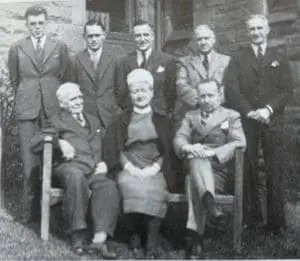 World War 2 began in 1939. In that same year the hospital admitted 605 inpatients and treated 2,005 outpatients. An enhanced contributory scheme was introduced in 1943 and a shop run by volunteers sold everything from collar studs to furniture. The shop closed in 1946 having raised over £1500 for the hospital. In 1947, its final year as a voluntary institution, the committee purchased Oakfield in Hill Street for use as a nurse’s home.
In 1954 alone some 289 operations took place, with 224 babies delivered in the maternity unit. In 1963, a physiotherapy department was built as a memorial to the late Viscount and Bertha Lady Bledisloe.
Visitors to Lydney Hospital took a trip into the past this week, to the days before the National Health Service when medicine was a more primitive affair. A machine for rolling bandages and a tonsil guillotine were two more unusual items on display.
Centenary celebrations reported in The Citizen October 1982
 Melville Watts was the chair and driving force behind setting-up the Friends of Lydney Hospital in1969. Together with very many organisations, local people, and grateful patients they continued to support Lydney Hospital. The funds raised helped to purchase new equipment and furnishings that have benefited the staff and local population.
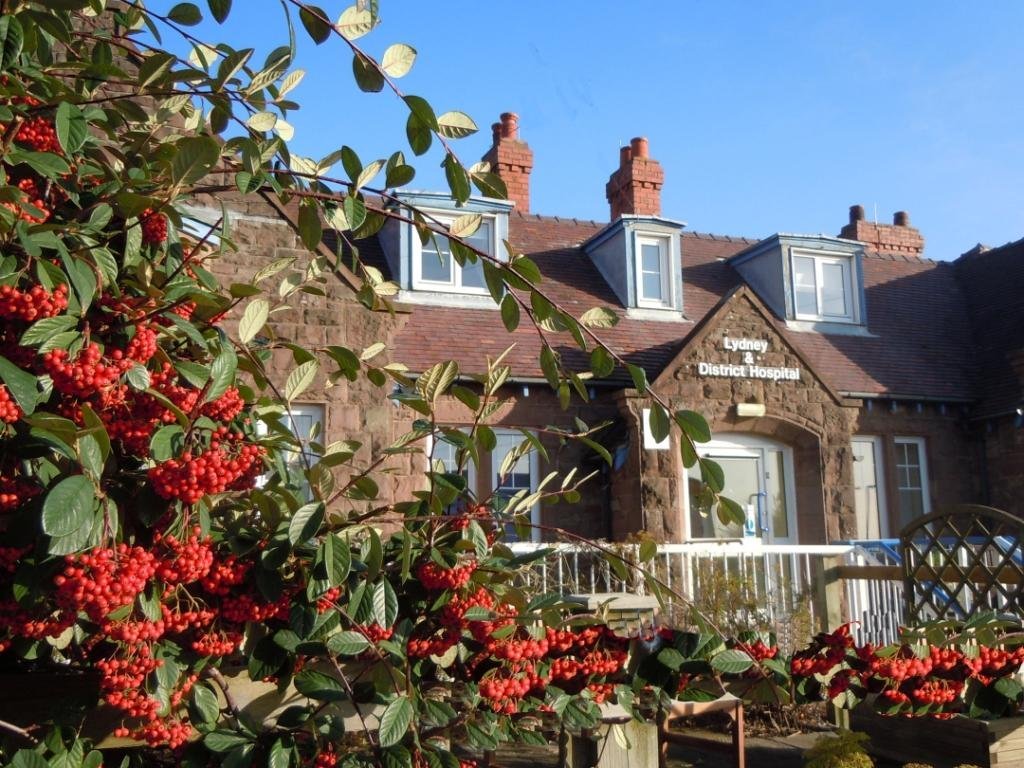
In 2016 the difficult decision was made to close the Dilke Memorial Hospital and Lydney and District Hospital to build a modern purpose-built hospital with upgraded facilities and infrastructure to serve the Forest of Dean. In April 2024 staff and services moved to the new hospital in Cinderford ensuring ongoing services for the Forest of Dean. The Minor Injuries and Illness team were amongst the last to leave the hospital. Several community services remain based in Lydney.
Written by Averil Kear (Vice-president Forest of Dean Local History Society) with contributions from society members and local historians, Friends of Lydney, and GHC staff.